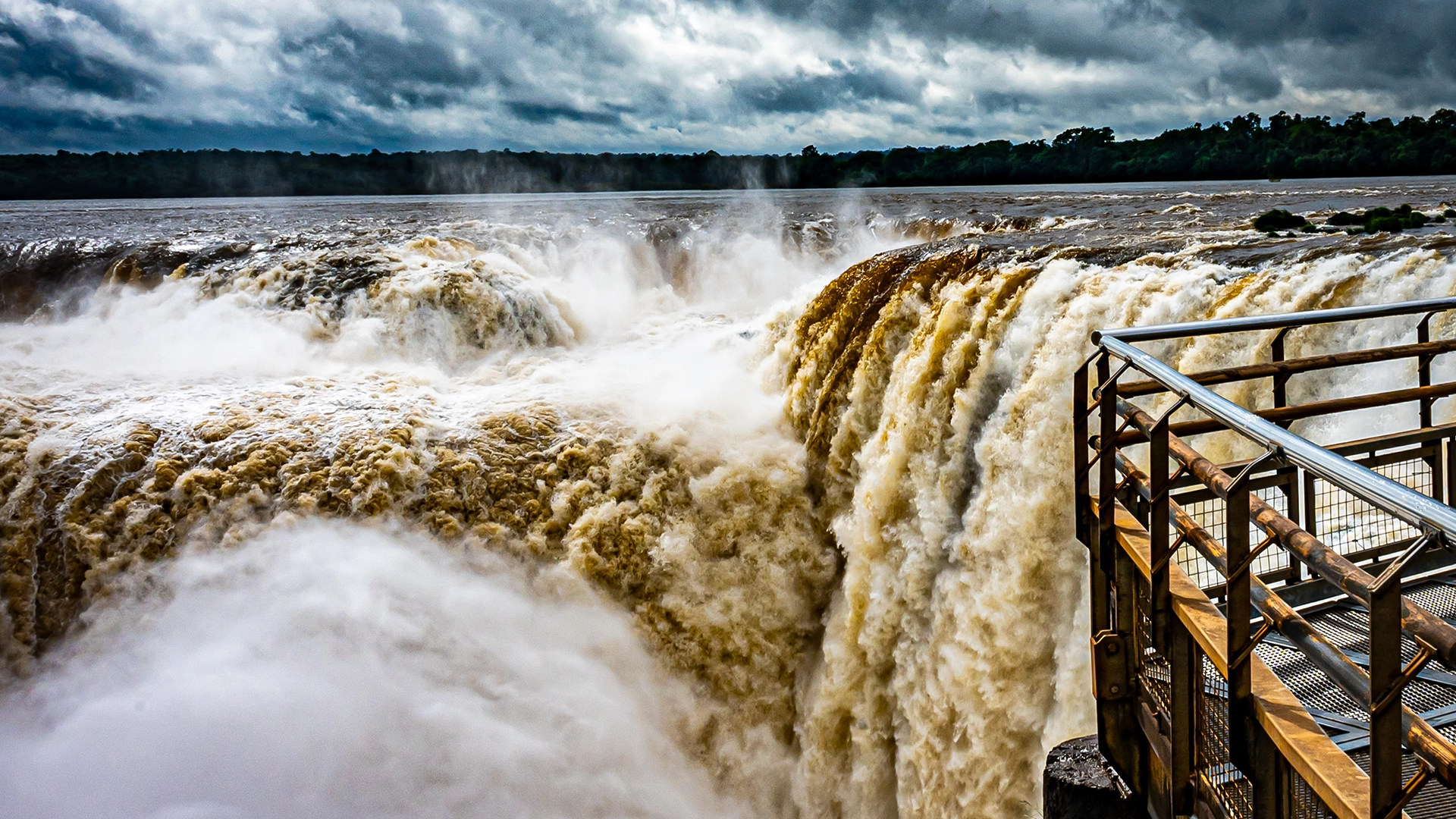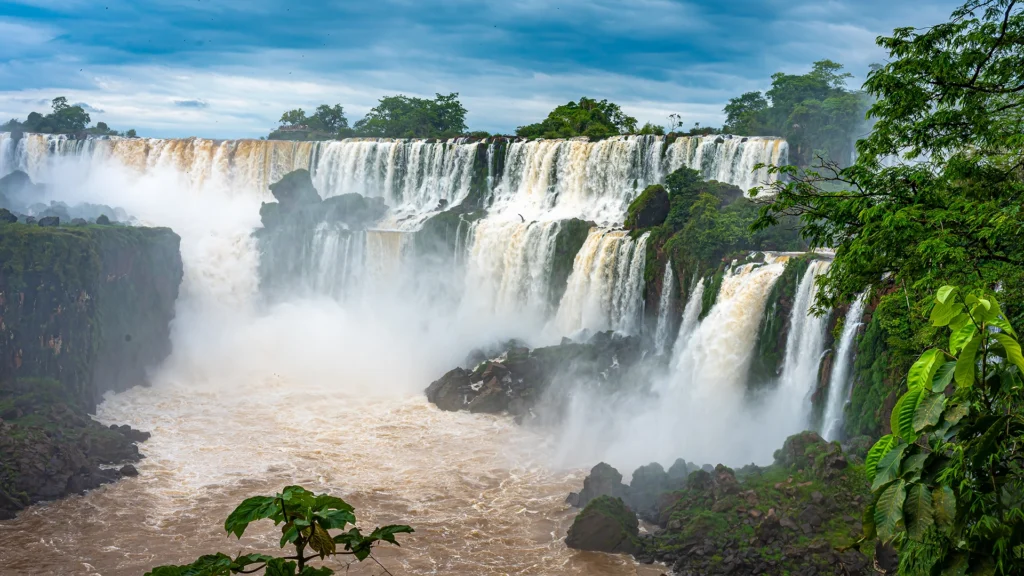
What many travelers don't know is that Iguazu is potable water. Beyond the wonder, there is an underground aquifer that feeds more than 600 thousand people in Misiones, Argentina. Every drop you see fall has a story of responsibility. That is why sustainable tours in Iguazu begin on the Argentine side, where you understand the urgency of protecting this.
On the trails of Iguazú, Argentina, we walk with specialized local guides who know every orchid species, every migratory bird of the Paranaense Rainforest. This is not a two-hour tourist tour. It is an immersion where you discover why this destination must be protected. Some clients choose to stay in Iguazú, Argentina, in small, family-run accommodations operated by communities that depend on the living forest—not the exploited forest. Ecotourism in Iguazú begins here: with the right choice.
But then the moment arrives. You cross the border. You go from Argentina to Brazil. Same waterfalls, completely different perspective.
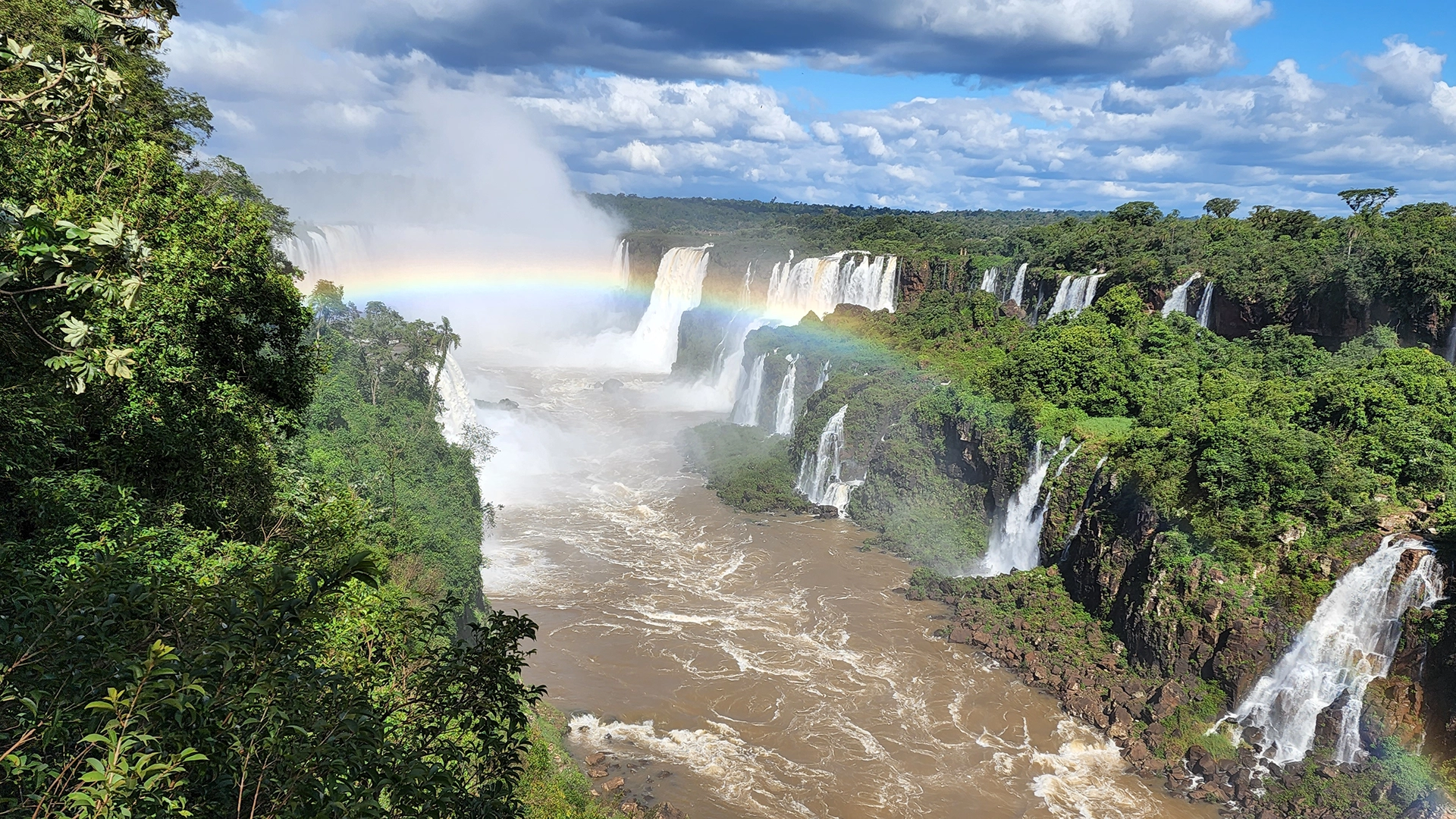
Iguazu Brazil is more. More water, more volume, more power. The Brazilian side displays the wonder on an overwhelming scale. It is easy to be a tourist here. The hard part is being responsible. Our groups in Foz do Iguacu are small. We go down at the exact right moments, with local guides who know how to minimize environmental impact while maximizing the experience. In Foz do Iguacu, responsible tourism means choosing well: when to go, who to go with, where to leave money.
The difference is not geographic. It is political. In Argentina, you walk a river that the Misiones region protects as a water source for the people. In Brazil, you experience that same water turned into tourist pressure, into volume, into numbers. You see how one side of the river prioritizes conservation and the other negotiates between revenue and protection. It is uncomfortable to see live. It is honest. It is what we want you to understand about tourism in South America.
And then there’s the Paranaense Rainforest. 92% gone. The remaining 8% is in this region, divided between Argentina and Brazil. It’s not just a statistic when you’re there. It’s a race against the clock where every tree counts. Some of our conscious tourism trips include time spent with local organizations that are restoring fragments of the forest. It’s not just cheap volunteer work. It’s a real exchange.
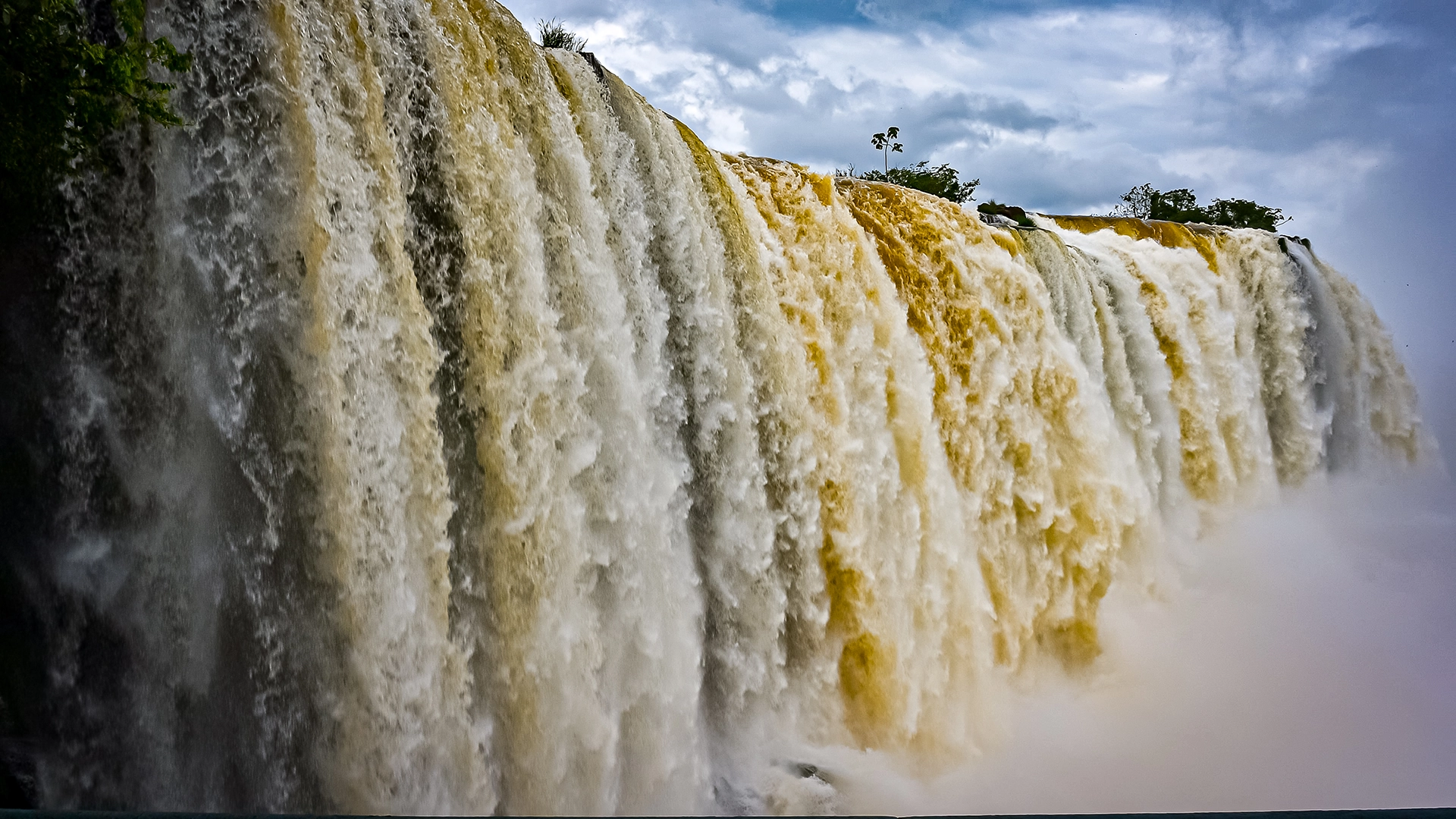
What you do here—where to sleep, who to hire, when and how to visit—directly feeds people who have a real incentive to care for what they have. A dollar you spend in Iguazu Argentina feeds communities in Misiones that live off the living forest. A dollar in Foz do Iguacu Brazil funds local guides, small lodgings, conservation initiatives.
When you return home, you don't leave Iguazu behind. You carry two perspectives of the same marvel. You understand that beauty and responsibility are not opposites. You understand that tourism can be part of the solution—or the problem. You understand why crossing the border matters.